One of my earliest memories is of being with my grandparents on an agricultural trailer at the Machados estate, waiting for the rural workers who, that day, would not be going to the fields. They were going to vote in the first elections after 25 April. Dressed in their finest clothes, they came happily to take part in that other dawn — a new “whole and clean first day” — at the beginning of the construction of democracy. Many years later, I learned that this day would not have been possible without the independence struggles that, so far from the Alentejo, ran parallel to the anti-fascist struggle taking place there, also led by landless rural workers, rising from the ground, as they always had.
On the fiftieth anniversary of 25 April, at the invitation of the Portuguese Cinematheque, I curated the programme From State Cinema to Cinema Outside the State, in which the commemoration also took place through the presentation of the cinemas of Mozambique, Angola and Guinea-Bissau. On one of the interior walls of the Cinematheque building, Luciana Fina’s Sempre was being projected. We have maintained a long conversation, as well as a friendship. When I met Augusta, I told Luciana that we had to tell her story in the context of the anti-colonial and anti-fascist struggles.
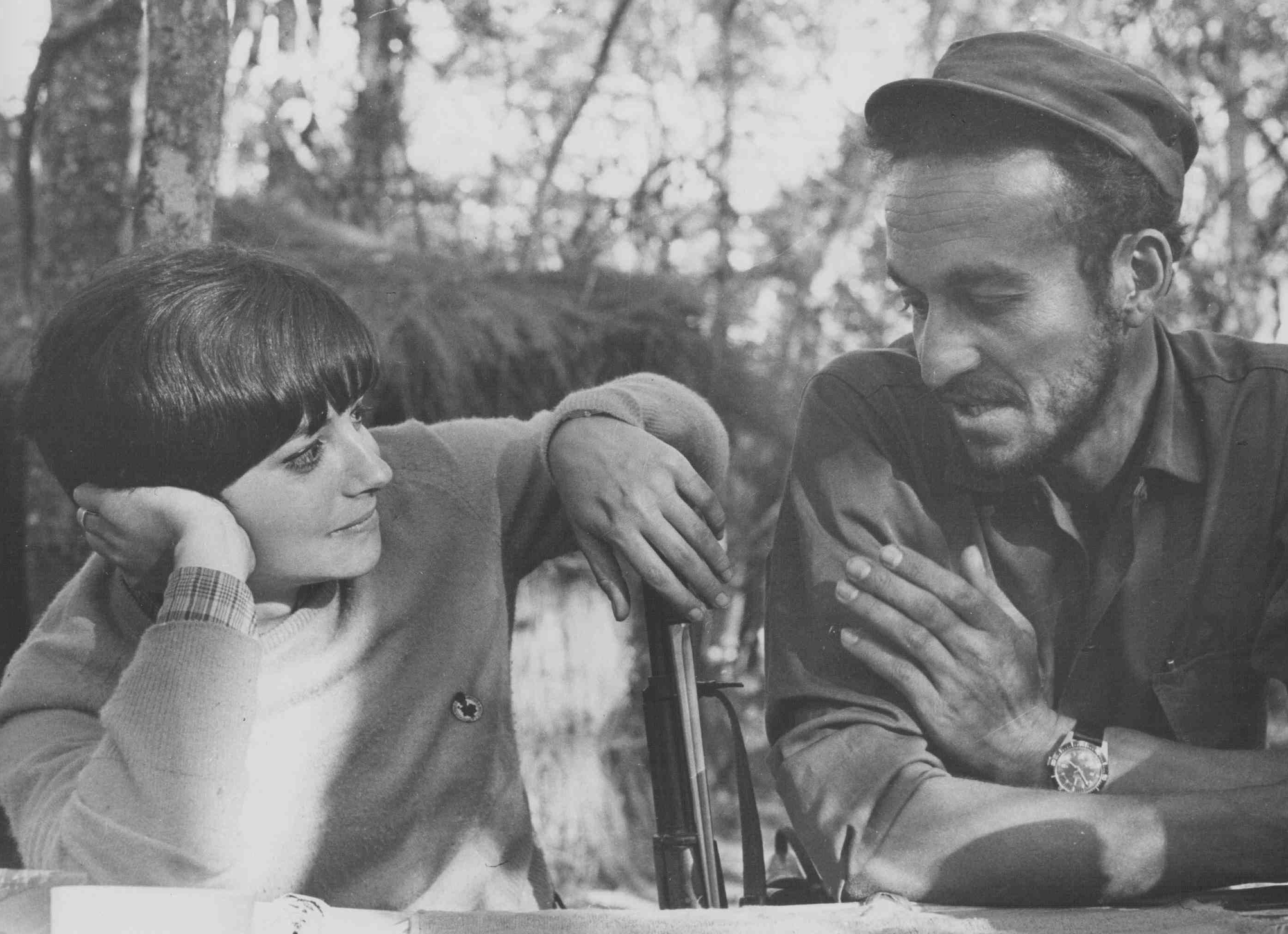
Luciana’s film, an atlas of the memory of an unfinished revolution, is — for me, and for many others — a path towards remembrance. But it is also exemplary of how an archive can reactivate gestures of hope and freedom. Around the same time, Pedro Neves was filming the documentary Os Continuadores da Revolução in Mozambique, a film moving between images of the past and present, in which the postcolonial contours of a newly independent country were being constructed. The film captures the birth and construction of a country through the gaze (and words) of photographer Manuel Roberto, as he himself matures, projecting his own suffering onto the suffering of those he photographed. The device he found for doing so lends itself to addressing the gaze of Augusta Conchiglia and her memories of internationalist encounters in this other film — a film made by three, in which different ways of seeing and making converge in harmony.
Curating From State Cinema to Cinema Outside the State brought together threads of research that began when, between 2006 and 2008, I worked on a social inclusion project for immigrant children and young people. Seeking answers to the social denial of systemic racism in a country that claimed to be free of it, I immersed myself in public and private archives. In the images preserved there, I sought to understand how power deliberately constructed and, paradoxically, projected a colonialist imaginary supposedly free of racism. During this action-research process, I soon encountered counter-images. They were — and remain — the cracks through which the light enters.
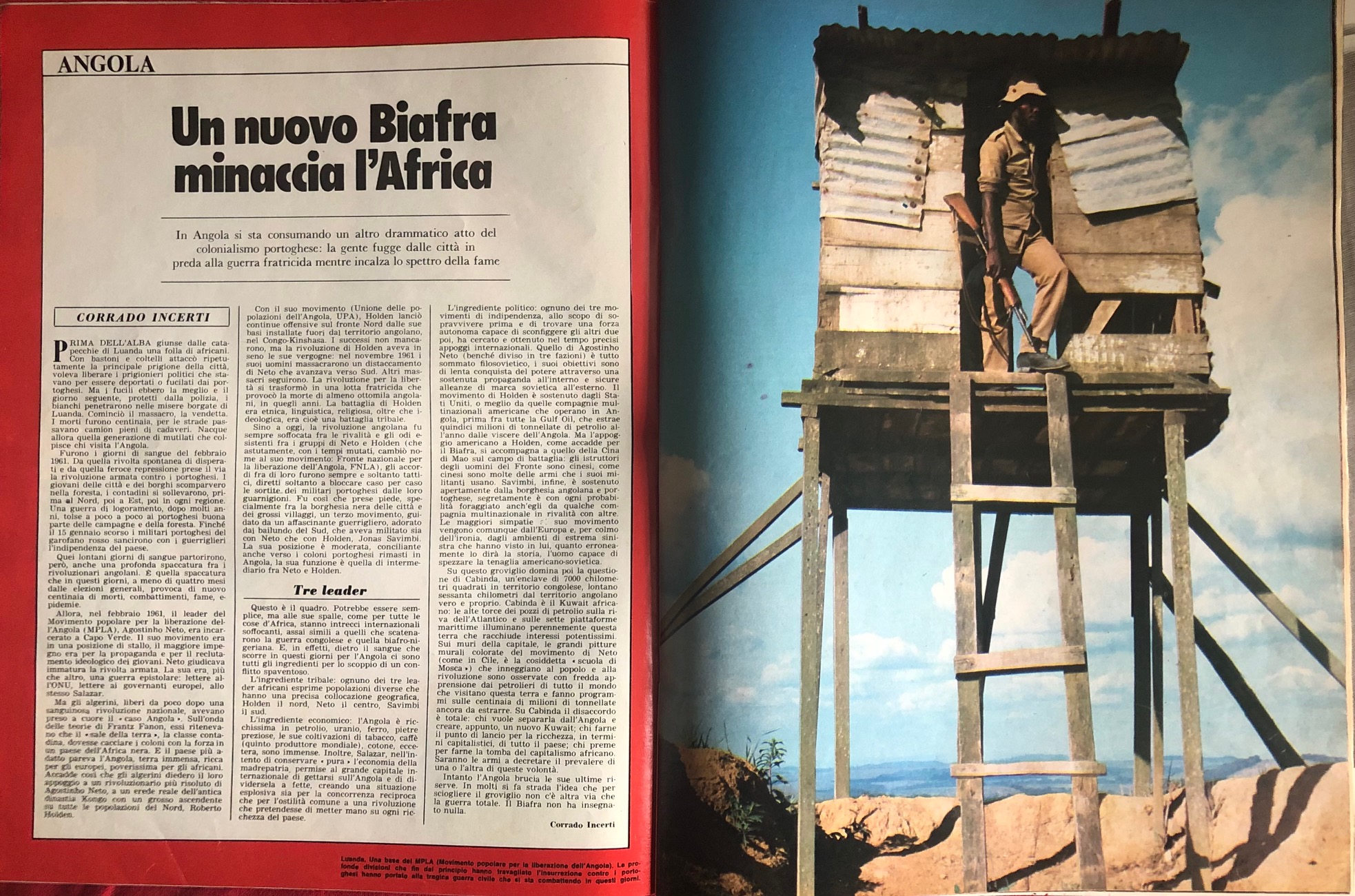
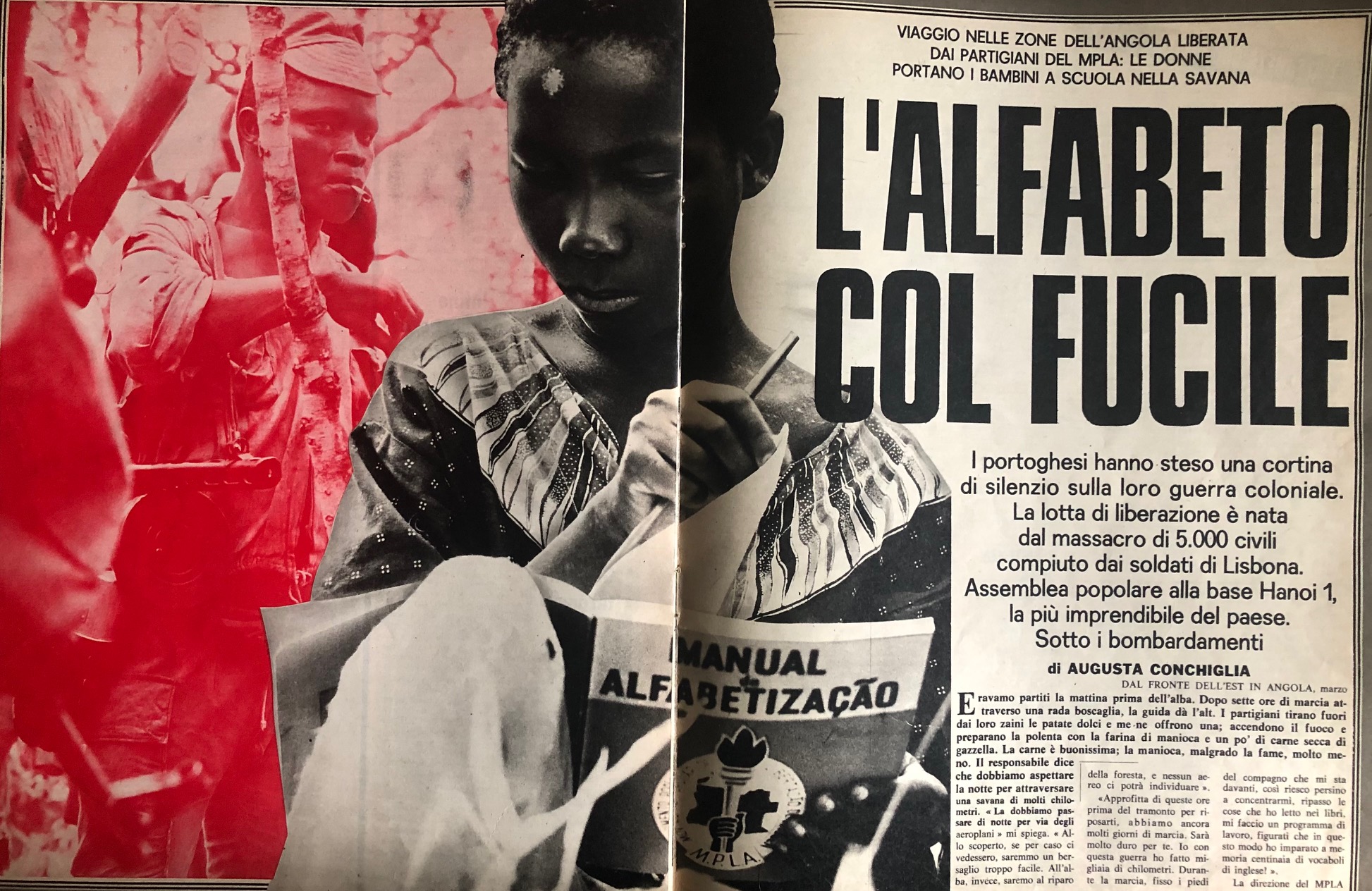
The process was illuminated by encounters both with “dazzling images” and with people who, within a context of internationalist solidarity, used the power of images (and words) to act politically. An encounter with Augusta Conchiglia — which led, in 2021, to the curation of the exhibition Augusta Conchiglia nos Trilhos da Frente Leste – Imagens (e Sons) da Luta de Libertação em Angola at the Aljube Museum — became an ongoing connection through a continuum of images and words. Rather than remaining encapsulated in Augusta’s memory, indelible traces of political action and internationalist friendships are deposited in her archive. It is upon this archive that we establish our “analytical camera”.
With Luciana Fina and Pedro Neves, we share a passion for images (and participatory democracy), united by the political desire to humanise the world through them. Our research, made up of epiphanies, gradually revealed films — some in the process of deterioration, others believed to be lost — disordered photographic archives and invisible people, or people deliberately rendered invisible because of their commitment and selflessness in their humanist actions.
From Augusta Conchiglia’s archive, we glimpse Guinea-Bissau, Angola and Mozambique, and bring into view many of those who chose to participate in the birth, through images, of these nations.
Between 1973 and 1975, Guinea-Bissau, Angola, Cape Verde, Mozambique and São Tomé and Príncipe were the last African countries to free themselves from European colonialism. Their liberation struggles forged the revolution that restored democracy to Portugal. One is intrinsically connected to the others.
The internationalist solidarities that supported these struggles took shape, among other forms, in a decolonising Third Cinema. The films produced aligned themselves with the objectives of the Tricontinental Conference, held in Havana in January 1966. Thus, during the liberation struggles and post-independence periods of the Portuguese-speaking African countries, cinema, television and photography were used to make the anti-colonial struggles known to the world and to consolidate the unity of the new nations, contributing to the creation of shared identities.
Liberation Images is an “Ariadne’s thread” through which, starting from the images and memories of Augusta Conchiglia’s encounters, preserved in the many records contained in her archive, we tell stories of the creation of — and of Conchiglia’s encounters with the creators of — the “dazzling images” of this Third Cinema.
The history of Augusta Conchiglia’s political commitment and network of friendships is exemplary of how, when national liberation movements began their anti-colonial struggles, they relied on internationalist solidarity to create counter-images in response to the propaganda of the Portuguese dictatorship.
After the Carnation Revolution — which Conchiglia was among the first to report on, before travelling to Mozambique, where she was present both before and after independence — how did they imagine Portugal as a unique social laboratory in Europe? How, under the influence of the Third Cinema project, and by recording “scenes from the class struggle”, did filmmakers (and filmmaking collectives) document the Ongoing Revolutionary Process and the beginning of the Agrarian Reform?
Following independence, cinema and television projects were conceived to promote the creation of new national identities in the newly independent Portuguese-speaking countries. How did this internationalist “generation of utopia” contribute to the development of cinemas in Mozambique, Angola and Guinea-Bissau? Efforts to establish national cinemas received contributions from Cuba and France, Italy, as well as the Soviet Union and other countries in Northern and Eastern Europe. What contributions were made by the Cuban Institute of Cinematographic Art and Industry (ICAIC), by filmmaking collectives such as Unicité that emerged after May 1968, and by the filmmakers involved in them?
Nevertheless, in the new African nations, the lack of technical infrastructure for film and even television production, the absence or scarcity of trained professionals, limited financial resources, as well as the wars that erupted within a context profoundly conditioned by the apartheid regime, ultimately condemned the utopian project of creating national cinemas through state initiative.
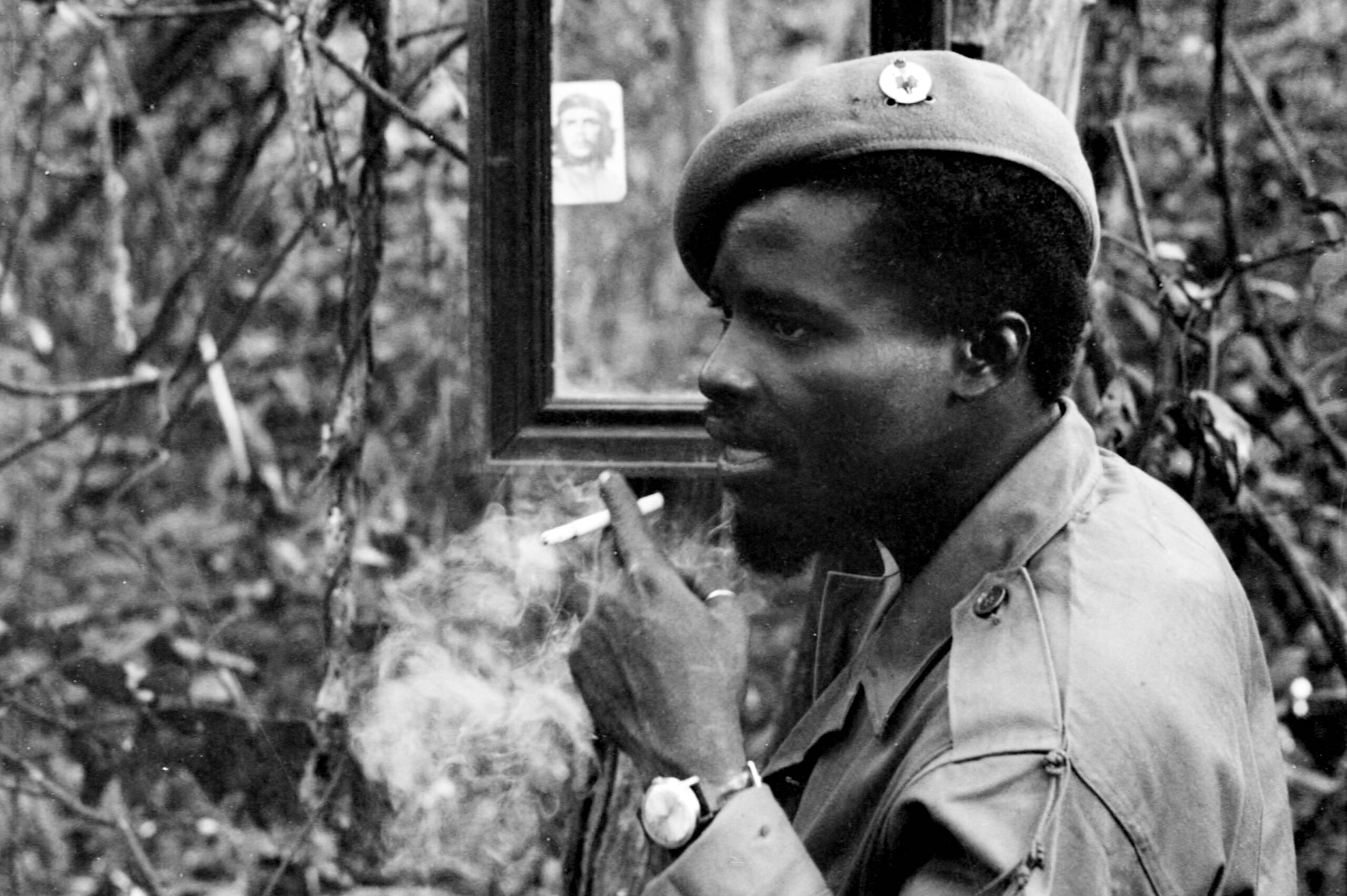
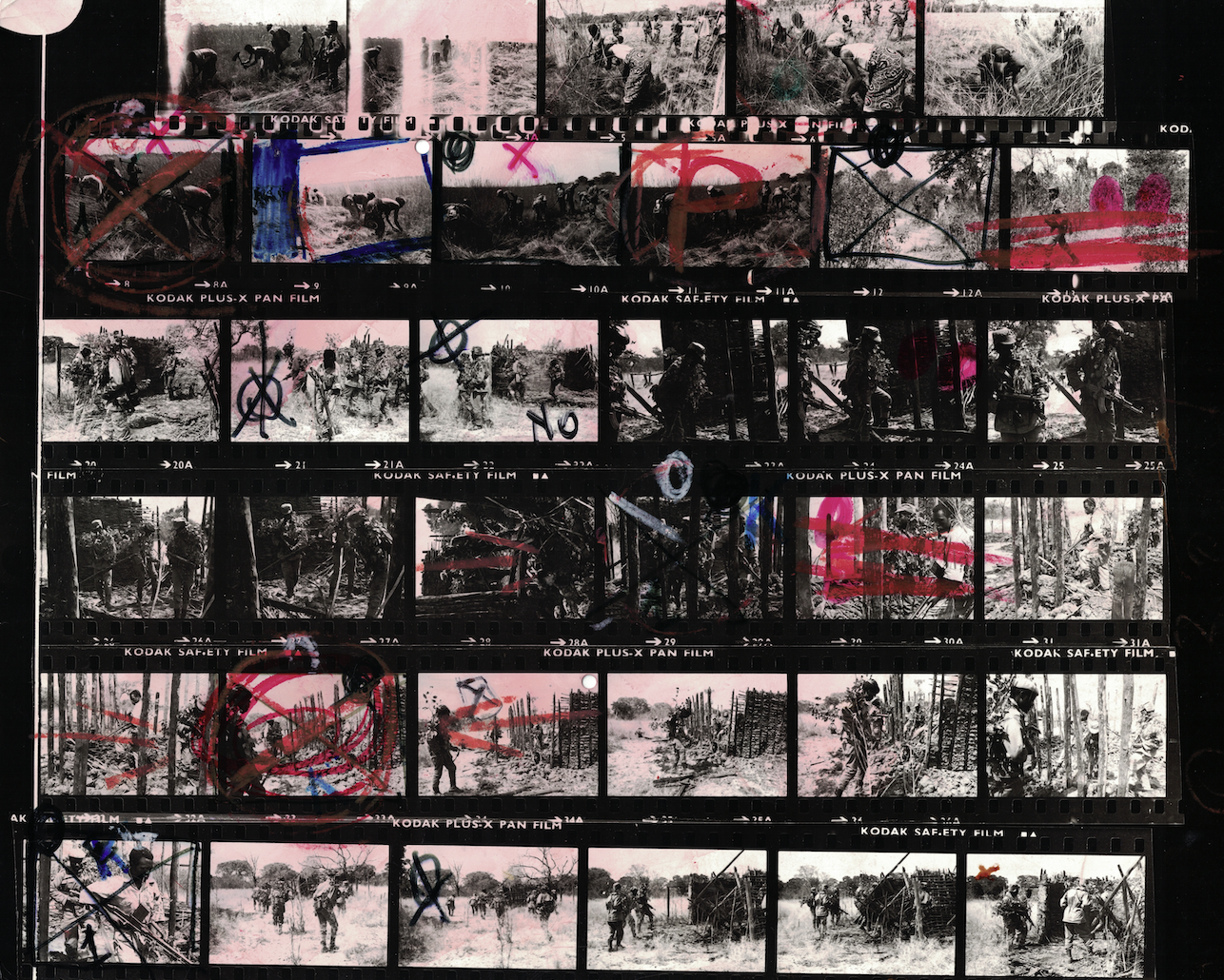
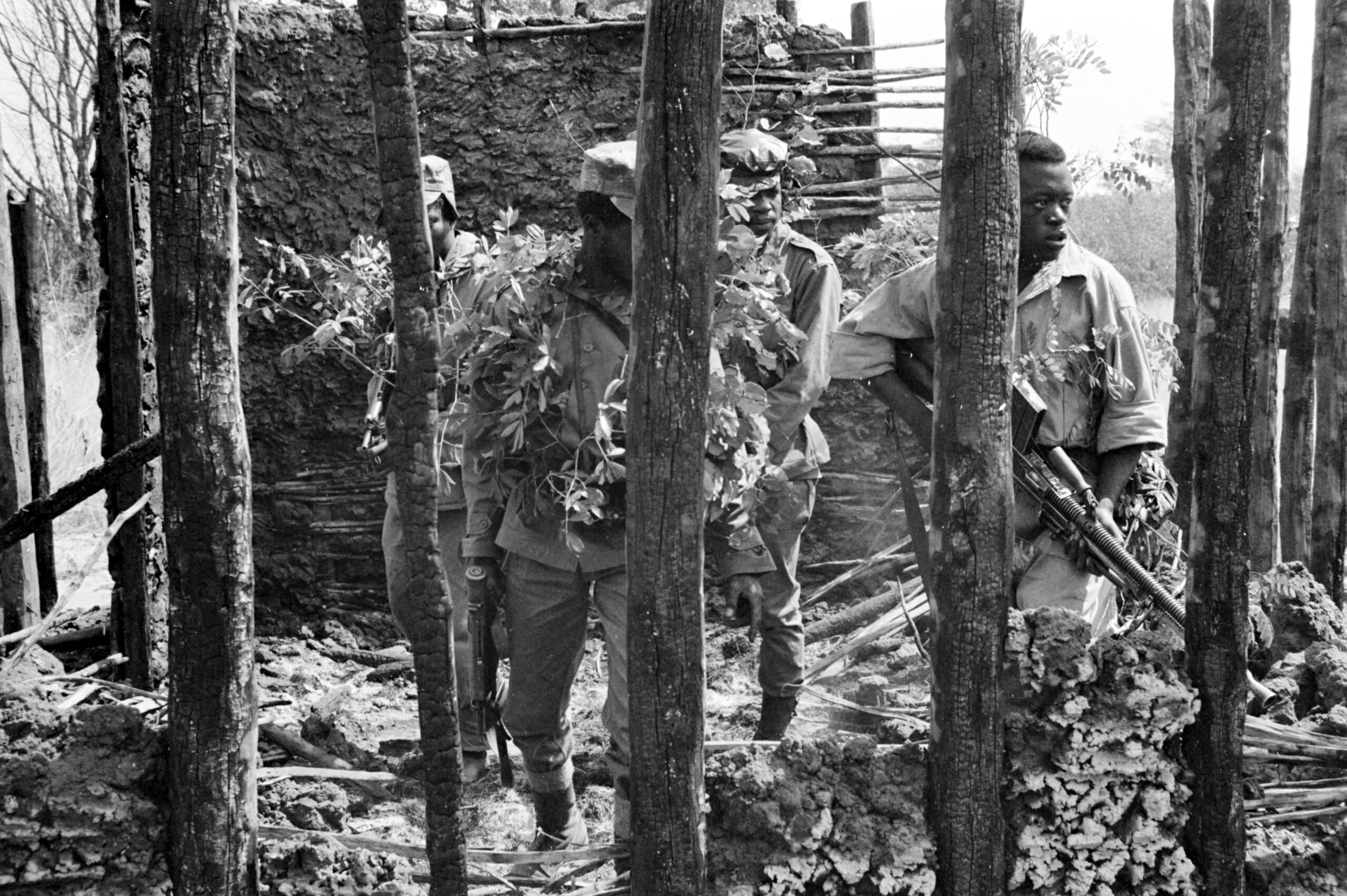
There is a disordered, undisciplined micro-history yet to be written — a history of the men and women who made images of liberation. We tell it through the images and words deposited in Augusta Conchiglia’s disorderly archive, through which we hear a babel of voices and accents, sounds of liberation — gunshots, cameras filming and photographic shutters firing — and gain access to counter-images, with recurring variations on themes such as napalm burns, wounds, children’s training, popular indoctrination sessions, but also schools and hospitals in the liberated zones.
There are also dazzling images of the restoration of democracy, of new flags being raised and the flag of colonialism being lowered. There is cinema of urgency, and photographs that are monads, because they contain within themselves all the complexity and emotion of the revolutionary instant.
In Augusta Conchiglia’s archive — she was a correspondent for the French magazine Afrique Asie and its English-language edition Africasia — we find traces of the lives of those who lived in commitment, behind the scenes of revolutions, recording the urgency of a more just world.
It is to them that Liberation Images is indebted.