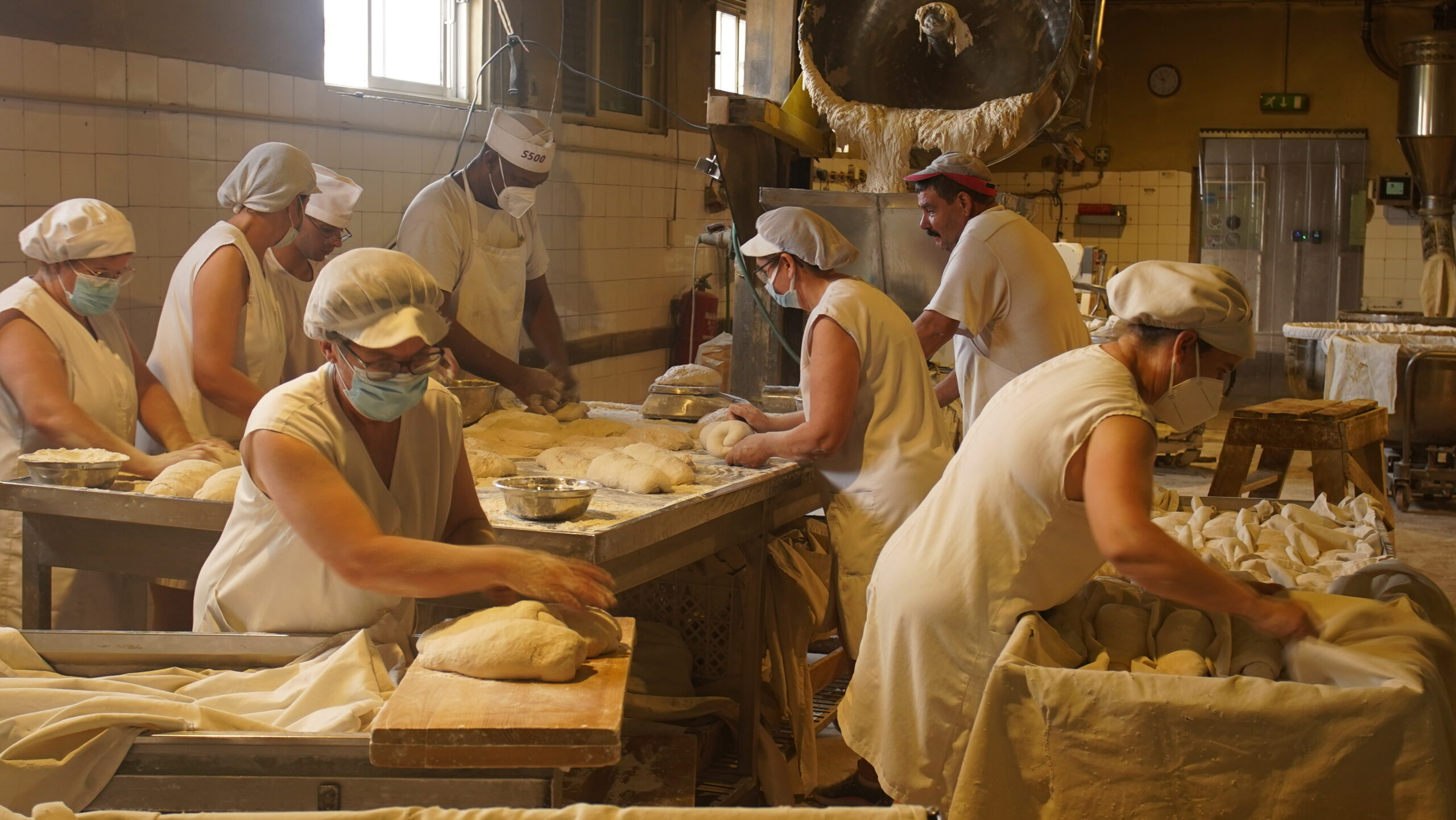
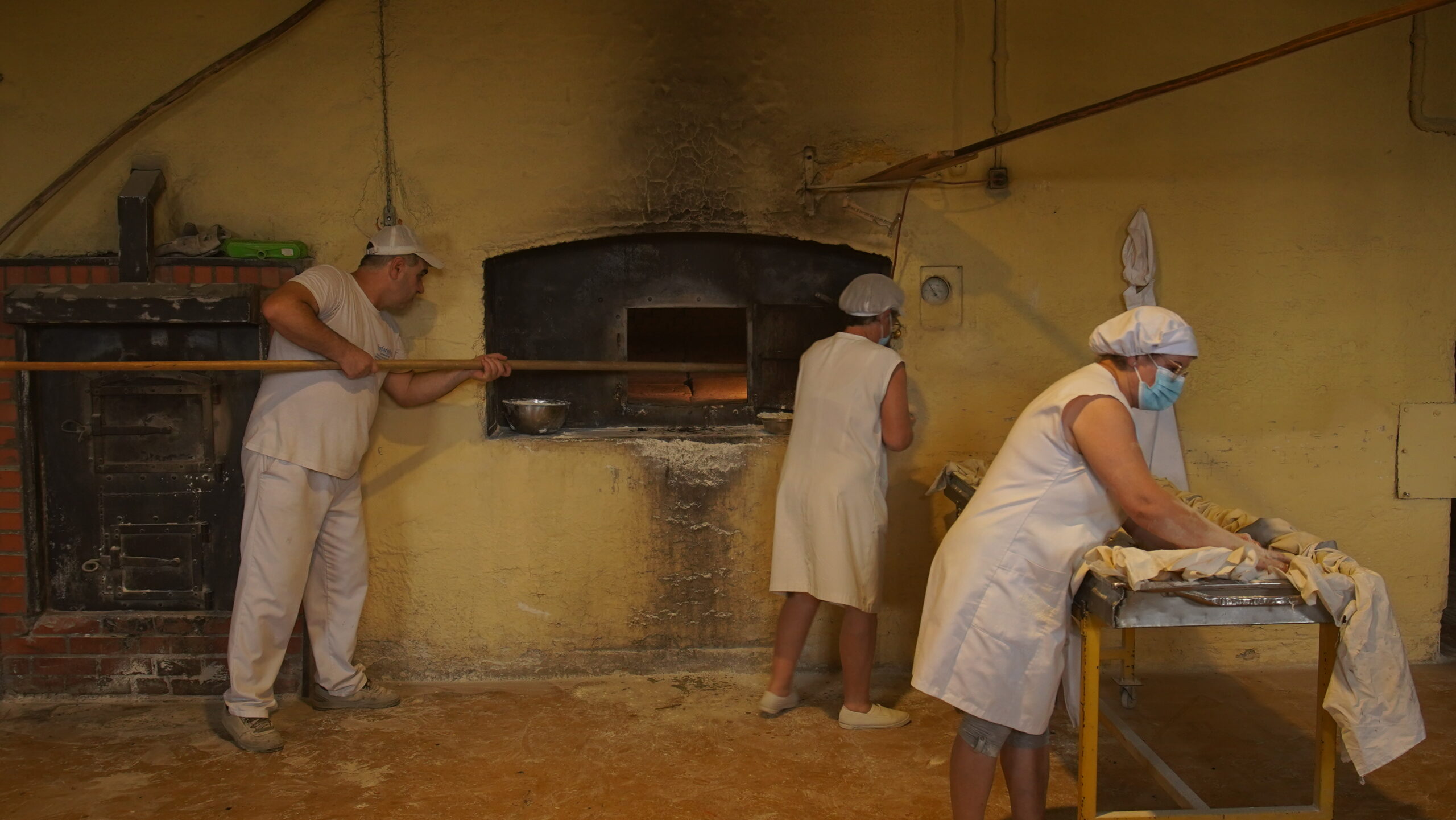
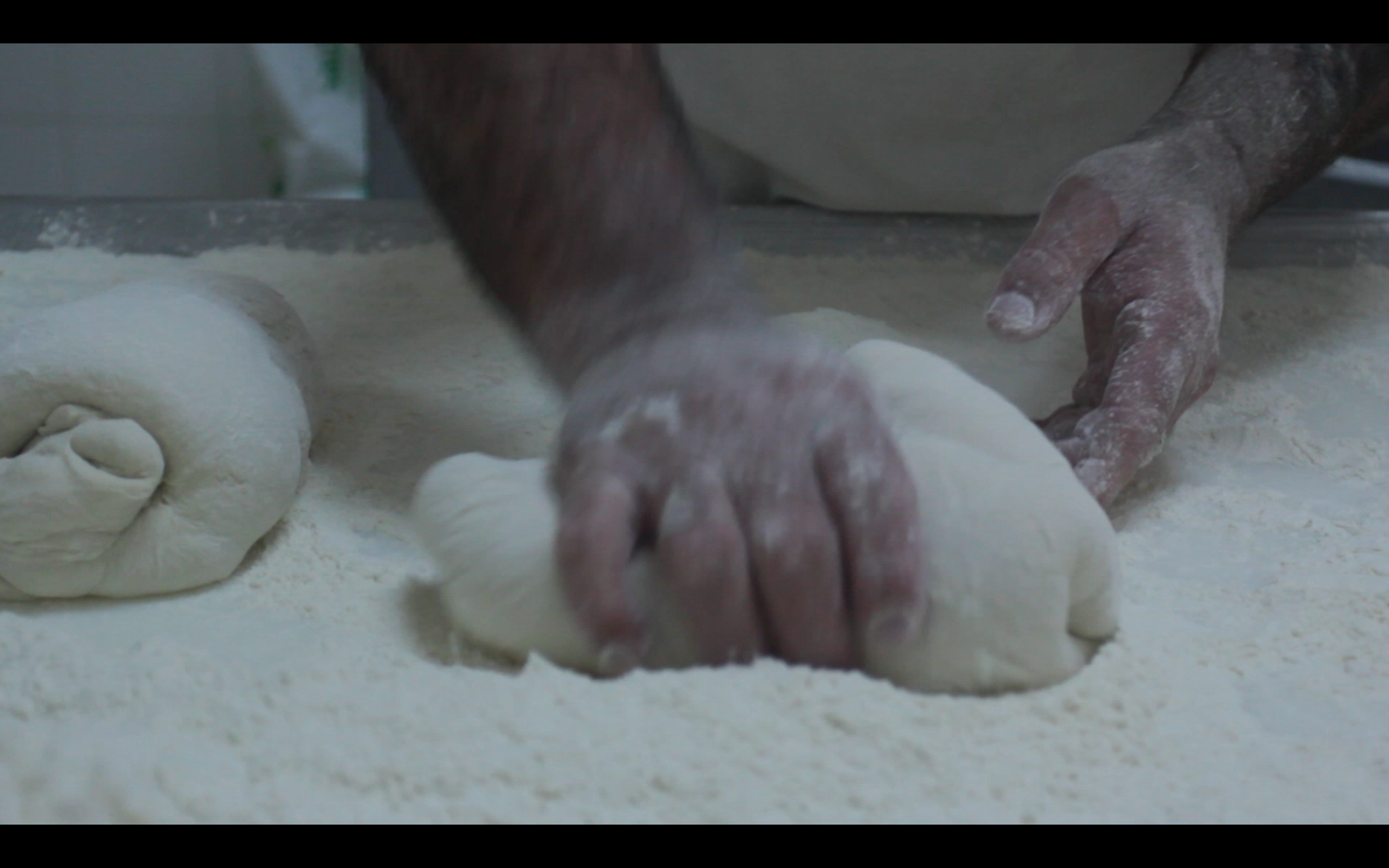
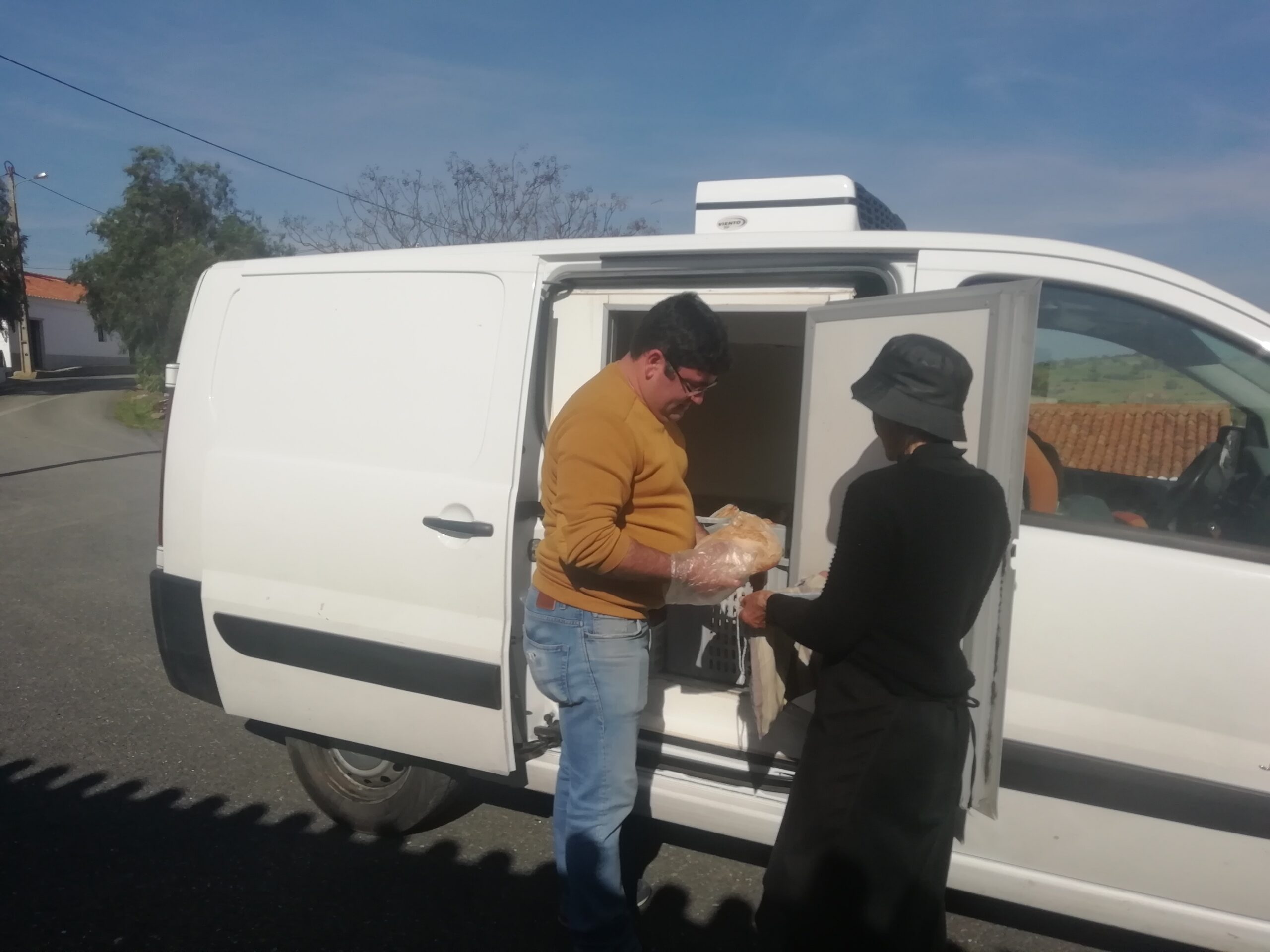
In Santa Iria, my village, on summer evenings, every Friday, people would wait for the fresh batch of bread, looking forward to opening it and spreading it with butter. Children played, adults gathered and socialised, and some of the men played malha. Bread is part of my childhood memories and is the evocative food of the Alentejo.
To speak of bread is to remember the wheat campaigns and the harshness of work — and of life! — as in Manuel Guimarães’ film O Trigo e o Joio; the alentejan songs devoted to the work of women reapers, such as Ceifeira, Linda Ceifeira; the sacred intertwining of land and bread in Alentejo, Alentejo; and the profound connection to the land which, even when we are forced to leave, remains with us, sung in songs such as Quando Eu Chegar ao Barreiro or Alentejo, És Nossa Terra. To speak of bread is also to recall the alentejan neo-realist works, particularly those of Manuel da Fonseca, such as Cerro Maior and Seara de Vento, which have always fascinated me because of their profound relationship with ways of life, their sharp social criticism, and the accumulated tension — a subterranean, brooding unease running through the fields — which is translated visually in films such as Luís Filipe Rocha’s Cerromaior and Sérgio Tréfaut’s Raiva.
I am troubled by living in a territory where processes of transformation merely contribute to the persistent exodus of its people, particularly younger generations, the ageing of the population, and the exploitation of agricultural workers, who today are mostly immigrants. Neoliberal progress keeps the region profitable for large landowners, erasing its historiography and neglecting its future.
The idea for the film is being developed while oral accounts, historical memory, and the knowledge of breadmaking still exist, in order to invite younger generations to share what they think about the Alentejo. Our emotional and cultural connection to bread provides the starting point for reflecting on the region’s collective development and on how new directions might be found for the organisation of agriculture, culture, the economy, society, and individual lives, so that, ultimately, we might be able to live in the Alentejo.
In this film, I intend to interpret the present through the subjective experiences of young people, an authorial perspective rooted in the region, and the landscape. The historical perspective will draw on the RTP archives, from Um Povo Que Se Levanta, to reports on drought dating back to the 1980s, cultural programmes such as Baixo Alentejo, ainda uma palavra, as well as audiovisual archives held by municipalities and the Lisbon Videotheque. Bibliographical research and exploratory conversations with local inhabitants will also be essential to deepen the reflection on contemporary ways of life. In this way, the film can project itself towards the future and towards the role to be played by younger generations. I believe that their participation will make a unique contribution to the film’s ability to play a meaningful historical role.
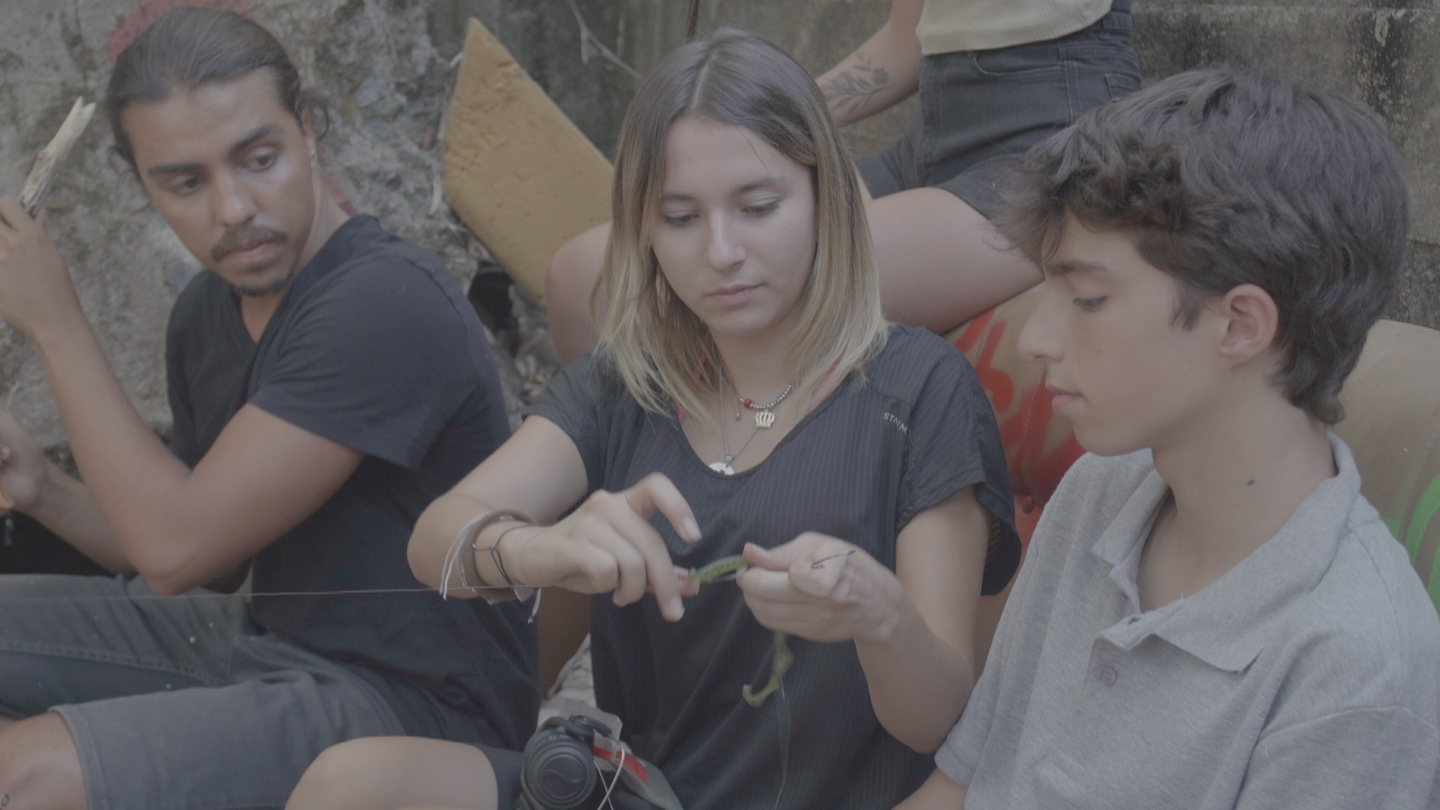
As I live in Serpa, and my film A vida aqui, está vista? was shot in Mina de São Domingos, in 2023 I brought together a group of young people for filmed rehearsals, which contributed to shaping the project. In 2024, with the support of Professor António Casaca, I conducted a video workshop with secondary-school students from the Multimedia course in Beja, who expressed an interest in taking part in film projects. We remain in contact with this group and with Professor António in order to continue our collaboration.
AS LONG AS THERE IS BREAD requires a sustained engagement with the territory, which has high levels of youth exodus, and with the film’s protagonists, adapting to their needs. The relationships and contacts I have developed over the years give me access to organisations, places, events, and people throughout the region.
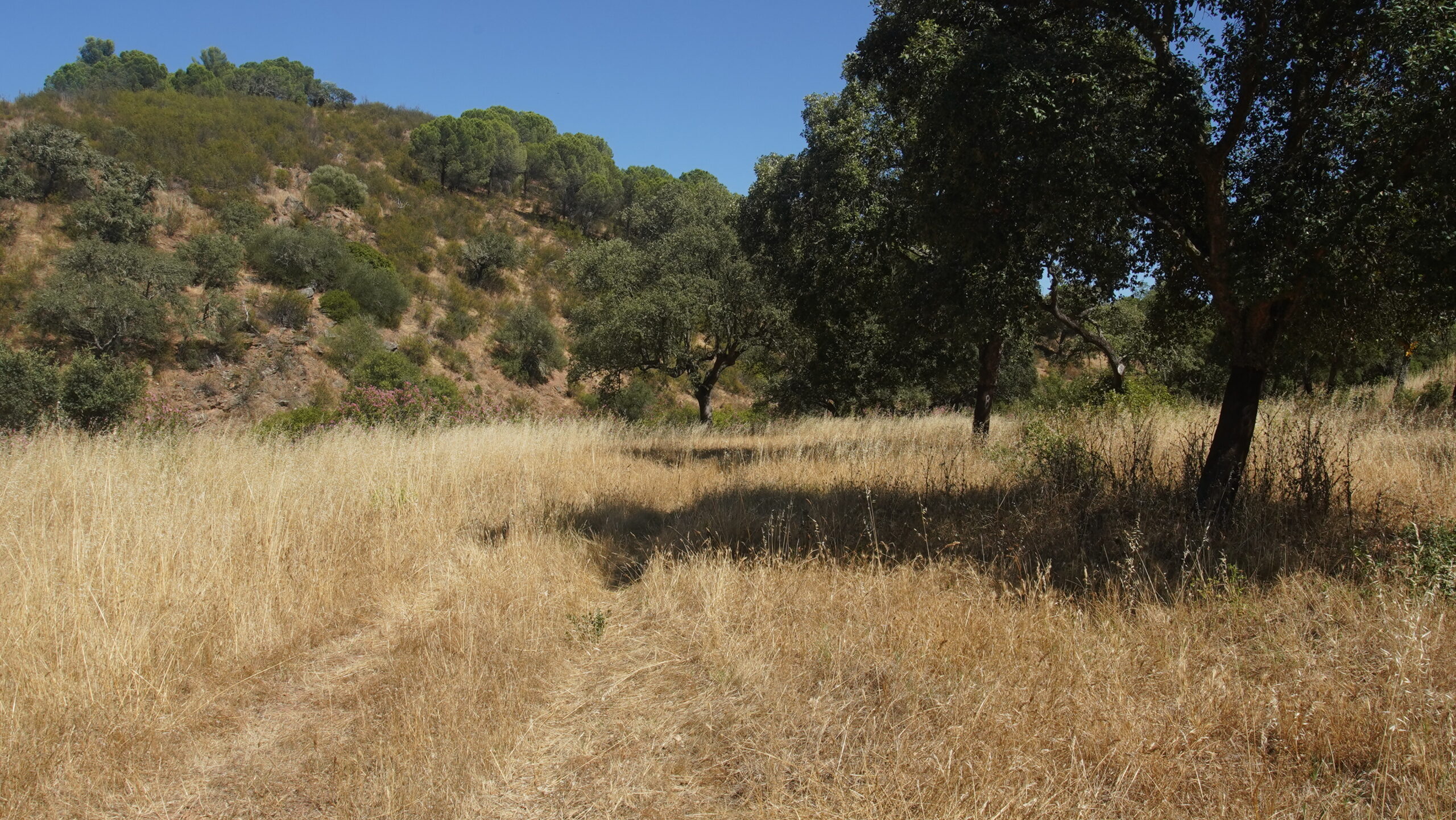
The cinematic approach seeks to explore alentejan naturalism and to combine a distanced perspective on the landscape and ways of life with a closer, intimate perspective on the characters and their relationship with the territory. In the former, the scale is broad and the frame carefully composed; the colour palette is warm and affective. In the latter, the images become closer and the perspective moves between the characters and their surroundings. Intimacy becomes strange through the issues being addressed and, consequently, the colour palette moves towards cooler tones that emphasise this sense of estrangement.
The audiovisual archives condense a historical period viewed in relation to our contemporary moment: a past with few echoes in the present. The autobiographical voice-over is an element that places me within the narrative discourse, as someone belonging to the region, and which I intend to experiment with in the teaser.
Reflecting on the future of the territory is urgent at a time when the inability to imagine the future has become an existential condition, shaped by an increasingly atomised social organisation. This film seeks to sketch a (small) human atlas of the region. Ageing and depopulation suggest that the desert will become complete through the absence of human life.
AS LONG AS THERE IS BREAD is an invitation to interpret the contemporary moment and to project ourselves into the future of our region, the (Baixo) Alentejo.